Skip to product information
1 of 6

FYID-Feiyide

FYID C12–C25 Automated U-Bend Tube Orbital Welding Machine (For AI Data Center Cooling & Heat Exchanger)

FYID C12–C25 Automated U-Bend Tube Orbital Welding Machine (For AI Data Center Cooling & Heat Exchanger)

Regular price $16,560.00
Regular price Sale price $16,560.00
Sale Sold out
Shipping calculated at checkout.
Model

U-Bend Tube Orbital TIG Welder for AI Data Center Liquid Cooling and Heat Exchanger Tube Bundles — Φ9 mm to Φ25 mm Socket Welds on Combined Wall Thickness ≤1.6 mm

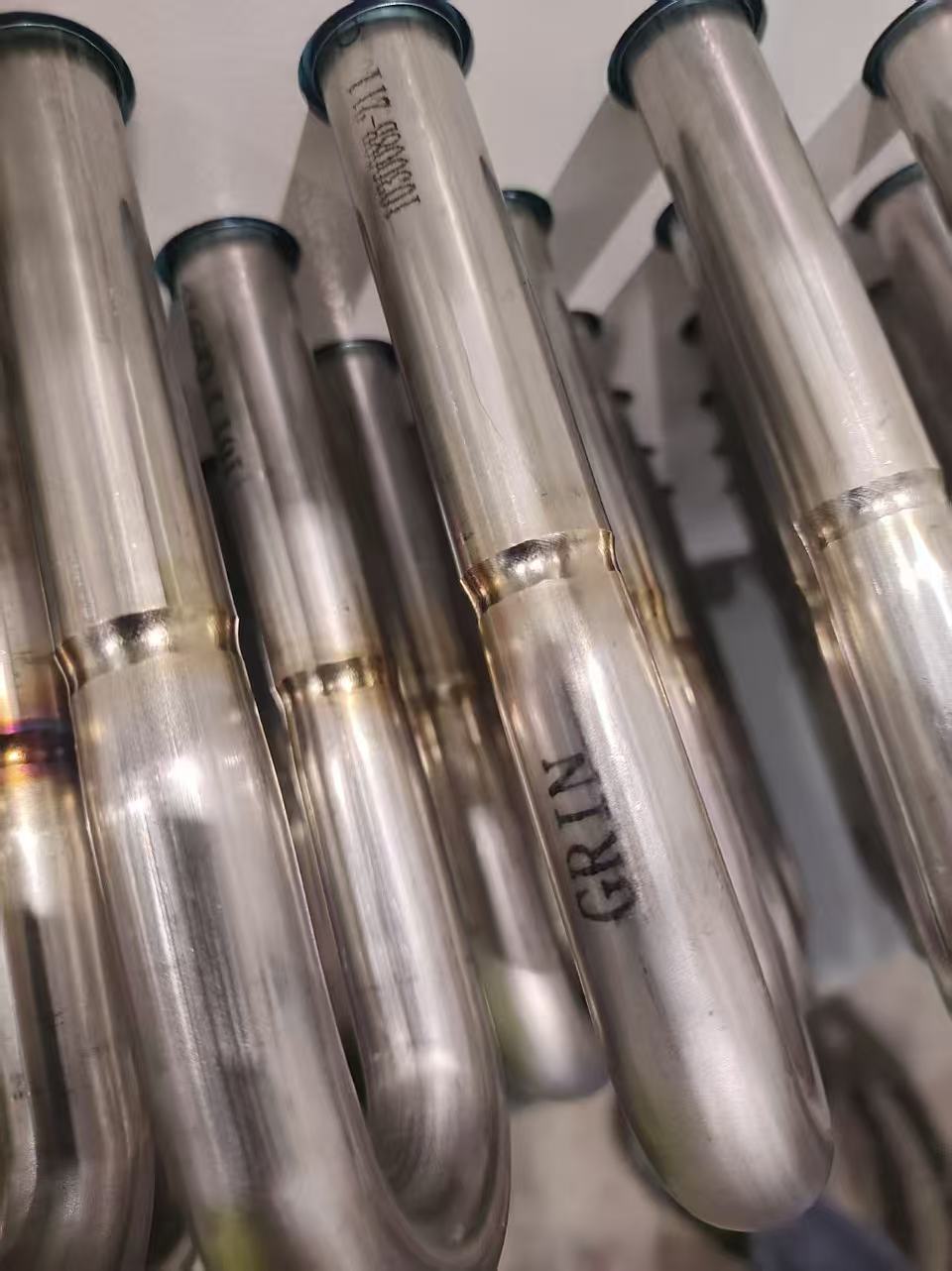
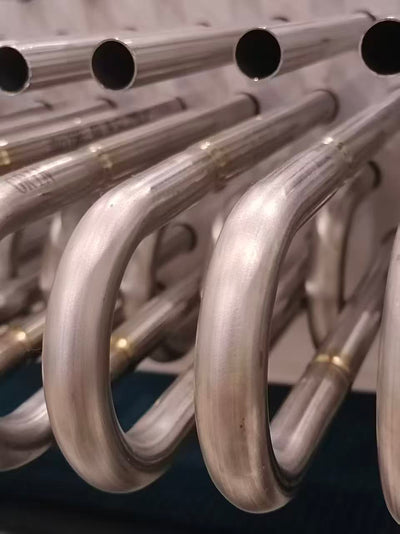
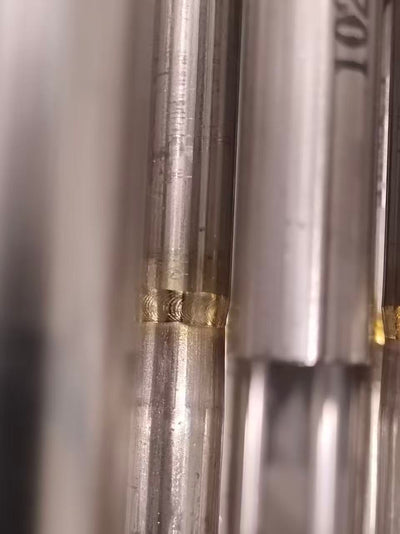
The FYID-Feiyide FXT20 Pro-C series is an automated orbital GTAW (TIG) welding system purpose-built for circumferential fillet welds between U-bend tubes and straight tubes — the "tube-in-tube" socket joint geometry found in heat exchanger U-tube bundles, AI data center liquid cooling modules, and pharmaceutical double-tube heat exchangers.

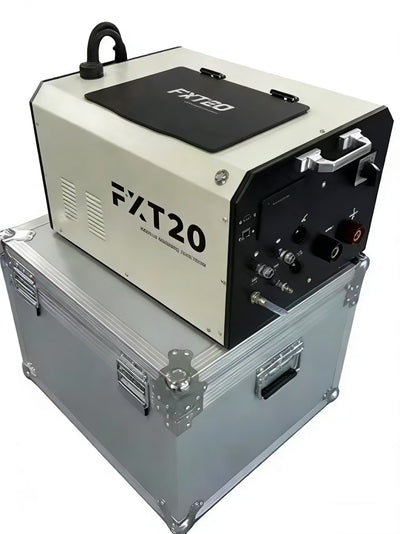
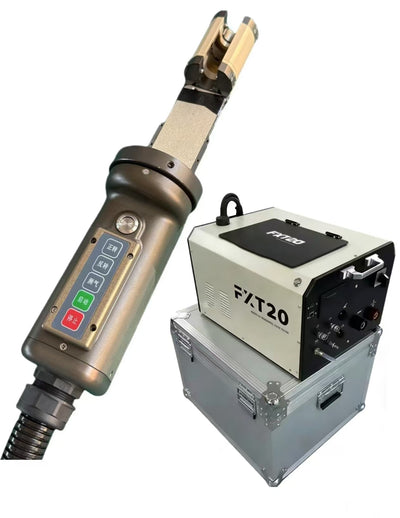
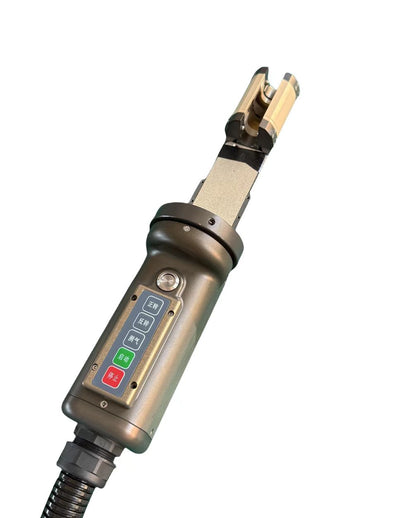
The system pairs the FXT20 Pro programmable power source (5 A – 200 A DC, pulse mode) with the C12, C16, C20, or C25 U-bend welding heads, covering straight tube outer diameters up to Φ12, 16, 20, or 25 mm respectively, with combined socket wall thickness ≤1.6 mm. The welding head's horseshoe-shaped structure requires a minimum tube center spacing of 38 mm (C12/C16) to 60 mm (C25), fitting within the standard equilateral triangle tube pitch of most shell-and-tube and printed circuit heat exchangers used in data center cooling infrastructure.

This is not a general-purpose orbital welder adapted for U-bend joints. The FXT20 Pro-C series was designed from the ground up for three failure modes unique to this joint geometry: arc length instability on the inner tube surface during rotation, burn-through on thin combined wall thickness at the socket, and insufficient argon protection of the 316L stainless steel inner wall during overhead passes. Each is addressed by a specific design feature — full closed-loop servo rotation, 5 A minimum arc initiation, and dual-channel integrated argon protection — described in the specifications below.

For straight-tube girth welds in data center liquid cooling loop piping (not U-bend socket joints), see the FXT20 with C-Series enclosed heads, which covers Φ6.35 mm – Φ168 mm tube OD in thin-wall applications.

FXT20 Pro-C System Specifications — Power Source and U-Bend Welding Head Models

FXT20 Pro Power Source

Parameter Specification
Welding process Autogenous GTAW (TIG) — DC and Pulse modes
Output current range 5 A – 200 A DC
Minimum arc initiation current 5 A (prevents burn-through on ≤1.6 mm combined wall)
Current type DC / Pulse — peak and base current independently adjustable
Input voltage 220 V AC ±10% or 110 V AC (selectable)
Frequency 50/60 Hz auto-adaptation
Power consumption 4.5 KVA
HMI display 10-inch color touchscreen, Chinese/English
Welding zones Up to 8 independent zones per circumferential weld
Stored programs 200 groups
Data output Built-in weld parameter printer; USB export
Rotation drive Full closed-loop servo motor with high-resolution encoder
Drive response time <1 ms (eliminates step-loss risk vs. stepper motors)
Torch cooling Circulating water (flow ≥600 ml/min, 0.3 MPa)
Standard cable length 8 metres flexible cable
Certifications CE, ISO 9001

C-Series U-Bend Welding Heads — Joint Geometry Requirements

Head model Max straight tube OD Combined wall thickness Min tube center spacing Min straight tube extension Head weight
C12 ≤ Φ12 mm ≤ 1.6 mm ≥ 38 mm ≥ 36 mm from tubesheet face 1.5 kg
C16 ≤ Φ16 mm ≤ 1.6 mm ≥ 38 mm ≥ 36 mm from tubesheet face 2.0 kg
C20 ≤ Φ20 mm ≤ 1.6 mm ≥ 54 mm ≥ 36 mm from tubesheet face 3.0 kg
C25 ≤ Φ25 mm ≤ 1.6 mm ≥ 60 mm ≥ 36 mm from tubesheet face 3.5 kg

U-bend insertion and fit-up requirements

The U-bend tube is inserted into the straight tube to a depth of ≥8 mm (measured from the straight tube end face). Socket insertion gap is ≤10% of the thinner wall thickness — for most applications, zero gap is the target. Straight tube out-of-roundness must be ≤5% to maintain consistent arc length during rotation. Perpendicularity deviation of the tube axis relative to the welding head axis must be ≤5°. These tolerances are not conservative: arc length is fixed by head geometry, so tube roundness and perpendicularity directly determine arc stability throughout the 360° rotation. Prior to ordering, FYID-Feiyide recommends customers submit actual tubesheet drawings for welding accessibility confirmation, as tube pitch and straight tube extension height must be verified against the specific head model geometry.

Weld-before-expand process compatibility

The FXT20 Pro-C series is designed for the weld-before-expand sequence required by ASME Section VIII, GB/T 151, and other heat exchanger fabrication standards. The low heat input of pulse TIG at 5 A – 200 A range, combined with precise zone-by-zone current control, produces a weld with minimal heat-affected zone. The joint does not crack during subsequent tube expansion. If expansion is performed before welding — trapping air in the tube-tubesheet annular gap — thermal expansion of that trapped gas during welding produces porosity in the weld root. The FXT20 Pro-C's documentation output supports compliance with standards that mandate the weld-then-expand sequence.

Industry Applications for the FXT20 Pro-C U-Bend Orbital Welding System

AI Data Center Direct Liquid Cooling — GPU Cluster Cold Plate Loop Manifolds

High-density AI GPU clusters — NVIDIA H100, H200, and successor architectures operating at 300 W to 700 W per chip in rack densities of 40 kW to 120 kW — cannot be adequately cooled by air. Direct liquid cooling (DLC) systems circulate deionized water or dielectric fluid through server-mounted cold plates and connect to facility cooling distribution units (CDUs) via stainless steel tube manifolds. The manifold assembly at the server rack or CDU level consists of U-bend tube connections between the supply and return headers — exactly the joint geometry the FXT20 Pro-C is designed to weld.

The specific technical requirement in AI data center liquid cooling is leak-zero performance: a single weld failure in a rack-level cooling manifold causes coolant contact with live GPU hardware, resulting in immediate rack shutdown and potential permanent hardware damage. Manual TIG on Φ12 mm – Φ16 mm 316L stainless tube at 0.8 mm – 1.0 mm wall thickness in a production environment produces insufficient repeatability for leak-zero standards. The FXT20 Pro-C's 5 A arc initiation and full closed-loop servo rotation deliver consistent heat input and arc length on every joint in a production batch, with per-weld parameter logging that supports quality inspection traceability for rack-level cooling system commissioning.

The dual-channel integrated argon protection — external weld pool and internal tube simultaneously — produces silver-white oxide-free weld interiors on 316L stainless steel, preventing iron oxide particulate from entering the cooling loop and reaching GPU cold plate micro-channels. Compatible tube: 316L stainless steel, Φ9 mm – Φ25 mm OD, wall 0.5 mm – 1.0 mm. Application: CDU manifold prefabrication, rack-level cooling loop assembly, DLC retrofit installations.

Shell-and-Tube Heat Exchangers — U-Tube Bundle Fabrication for Industrial and HVAC Applications

Shell-and-tube heat exchangers in HVAC, refrigeration, and industrial process service use U-tube bundle configurations where hairpin-bent tubes are inserted into a tubesheet and seal-welded at the tube end. In a standard U-tube bundle for a 500 kW to 2000 kW chiller or process cooler, the tubesheet may contain 200 to 800 tube penetrations. Each tube requires a circumferential fillet weld between the inserted U-bend and the straight tube stub — a repetitive, high-count welding operation where weld quality variance across hundreds of joints in a single bundle determines the assembly's leak test result.

Manual tube-to-tubesheet welding inside a dense bundle requires the welder to reach into the tube array with a TIG torch, maintaining consistent arc length and torch angle in positions constrained by adjacent tubes. In standard equilateral triangle pitch layouts at 38 mm – 54 mm center spacing, the manual welder's access deteriorates as tube count increases and the bundle interior becomes inaccessible without removing outer tubes. The FXT20 Pro-C's horseshoe-shaped welding head requires only 38 mm tube center spacing (C12/C16 models) to access and weld each joint — matching the minimum pitch of most commercial heat exchanger tubesheet layouts. One operator manages head insertion, clamping (30 seconds per joint with the elastic collet mechanism), weld cycle execution, and head removal without assistance.

Compatible standards: ASME Section VIII Div. 1, GB/T 151, TEMA. Compatible tube: stainless steel (304, 316L), carbon steel, titanium alloy. Tube OD Φ9 mm – Φ25 mm, combined wall ≤1.6 mm.

Central Air Conditioning — Evaporator and Condenser U-Tube Prefabrication

Central air conditioning units — water-cooled chillers, cooling towers, and precision air conditioning units in commercial and industrial buildings — use evaporator and condenser heat exchangers where stainless steel or copper-alloy U-tubes connect to straight tube headers. In high-efficiency chiller designs using stainless steel for corrosion resistance and system longevity, the U-bend-to-straight-tube joint must withstand refrigerant pressures of 2 MPa – 6 MPa and thermal cycling across the full operating range without leak initiation at the weld.

The FXT20 Pro-C replaces traditional silver brazing at these joints with orbital TIG welding, which produces a metallurgically bonded joint with significantly higher pressure capacity than a brazed joint (brazed joint strength depends on braze alloy and flux coverage uniformity; TIG weld strength equals base metal). For stainless steel tube in refrigerant service, the elimination of flux residue — a corrosion initiation site inside refrigerant circuits — is an additional quality argument for TIG over brazing. The 8-zone independent programming compensates for gravitational effects on the weld pool as the head rotates through the overhead position, producing uniform bead geometry at 6 o'clock (overhead) and 12 o'clock (flat) that brazing cannot match on small-diameter tube.

For precision air conditioning units serving semiconductor fabs or pharmaceutical cleanrooms — where coolant loop contamination from flux or braze particulate is a process risk — the FXT20 Pro-C's oxide-free weld interior is the technically correct specification. Compatible tube: 316L stainless steel, copper-nickel alloys. Tube OD Φ9 mm – Φ25 mm.

Pharmaceutical Double-Tube Heat Exchangers — GMP Hygienic U-Bend Welding on 316L Stainless

Double-tube heat exchangers in pharmaceutical manufacturing — used for product heating and cooling in API synthesis, fermentation, and WFI generation — consist of an inner product-contact tube and an outer utility-fluid tube, connected at the return end by a U-bend. The inner tube inner surface is a GMP product-contact surface subject to ASME BPE SF1 surface finish requirements (Ra ≤ 0.51 µm) and visual inspection for weld bead uniformity, oxidation, and crevice formation. The U-bend-to-inner-tube joint is the most difficult surface to inspect and the most likely location for bacterial harbourage if the weld is oxidized, pitted, or geometrically irregular.

The FXT20 Pro-C's dual-channel argon protection — external weld pool and internal tube inner wall simultaneously — produces the silver-white, oxide-free weld interior required by ASME BPE on 316L stainless steel without pickling or passivation in the completed assembly. The 5 A minimum arc initiation current handles the thin combined wall thickness (≤1.6 mm) of pharmaceutical-grade heat exchanger tube without burn-through, which is a rejection criterion on GMP product-contact surfaces regardless of whether the perforation causes a process leak. The built-in weld parameter printer produces per-joint documentation supporting the weld map and IQ/OQ/PQ validation records required for pharmaceutical heat exchanger qualification. Compatible standards: ASME BPE, FDA 21 CFR Part 11, EHEDG. Compatible tube: 316L stainless steel, Φ9 mm – Φ16 mm OD.

FXT20 Pro-C U-Bend Orbital Welder — Frequently Asked Questions

What is the difference between the FXT20 Pro-C U-bend welder and the standard FXT20 with C-Series heads?

The standard FXT20 with C5–C170 enclosed heads performs circumferential girth welds on straight tube-to-tube butt joints. The tube joint is enclosed inside the welding head, and both tube ends must be accessible for head installation.

The FXT20 Pro-C with C12–C25 U-bend heads performs circumferential fillet welds on the socket joint between an inserted U-bend tube and a straight tube — the specific "tube-in-tube" geometry of heat exchanger U-tube bundles and liquid cooling manifold return bends. The horseshoe-shaped head clamps over the straight tube from outside the tube bundle, requiring only 38 mm tube center spacing to access each joint. These are two different machines for two different joint geometries; they are not interchangeable.

Why does the FXT20 Pro-C use full closed-loop servo drive rather than a stepper motor?

During 360° rotation of the welding head around a U-bend socket joint, two forces act against uniform rotation speed: gravity (the weld pool tends to sag in the overhead position) and cable drag (the 8-metre flexible cable creates variable torque resistance as it wraps during rotation). A stepper motor runs open-loop — it commands position but cannot detect or correct speed deviation caused by these forces. A stepper motor in this application will produce measurable travel speed variation between the 12 o'clock (flat) and 6 o'clock (overhead) positions, resulting in different heat input and bead geometry at each position.

The FXT20 Pro-C's full closed-loop servo drive with high-resolution encoder detects speed deviation in real time and corrects within <1 ms. The result is uniform travel speed — and therefore uniform heat input — throughout the full rotation, ensuring consistent weld bead width and penetration at every clock position on the joint.

How does the dual-channel argon protection work, and why is it necessary for 316L stainless steel U-bend joints?

The FXT20 Pro-C welding torch integrates two independent argon channels: one for external weld pool shielding (standard for all TIG welding) and one that delivers argon inside the straight tube to protect the inner wall of the weld zone during the weld cycle. Pre-flow time, post-flow time, and flow rate for each channel are independently programmable.

Austenitic stainless steel (304, 316L) oxidizes rapidly above approximately 400°C. At weld temperatures (1400°C+), any atmospheric oxygen contact with the inner wall surface produces iron oxide scale — visible as blue, brown, or black discolouration — that is mechanically weaker than the base metal, creates a surface roughness incompatible with ASME BPE SF1 requirements, and in liquid cooling applications, generates particulate that can block GPU cold plate micro-channels. The integrated inner argon channel displaces oxygen from the tube interior during the weld cycle without requiring a separate back-purge setup from the tube end.

What tube center spacing does the welding head require, and how do I know if my tubesheet layout is compatible?

The minimum tube center spacing requirements are: C12 and C16 heads require ≥38 mm center-to-center; C20 heads require ≥54 mm; C25 heads require ≥60 mm. These dimensions are determined by the physical housing of the horseshoe-shaped welding head — if the tube pitch is tighter than the minimum, the head will contact adjacent tubes during the rotation weld cycle.

Standard equilateral triangle pitch heat exchanger tubesheets at 1.25× to 1.5× tube OD pitch will typically be compatible with the C12 and C16 heads for Φ12 mm and Φ16 mm tube. Before ordering, FYID-Feiyide recommends supplying the actual tubesheet drawing (tube OD, pitch, arrangement pattern, and straight tube extension height from the tubesheet face) for a free accessibility confirmation. Tubesheet layouts that do not meet minimum spacing can be evaluated for custom head configurations on request.

Can the FXT20 Pro-C weld copper-alloy tube in addition to stainless steel?

The FXT20 Pro-C is optimized for austenitic stainless steel (304, 316L) and duplex stainless steel (2205). Titanium alloy tube is also compatible with parameter adjustment. Copper and copper-nickel alloys have significantly different thermal conductivity and melting behavior from stainless steel — copper's thermal conductivity is approximately 25× that of 316L — requiring different current, pulse parameters, and argon flow rates. While the hardware is not prevented from running copper programs, FYID-Feiyide does not supply pre-qualified Expert Parameter Library programs for copper alloys in the standard configuration. Contact the applications engineering team for copper-alloy project assessment.

What documentation does the FXT20 Pro-C produce for heat exchanger quality records and pressure vessel inspection?

The FXT20 Pro-C logs current (peak and base), arc voltage, rotation speed, zone index, and timestamp for every weld cycle. The built-in printer generates a printed weld report per joint on demand. USB export enables unlimited data archiving. This output supports: ASME Section VIII Div. 1 weld procedure documentation, GB/T 151 heat exchanger fabrication records, ASME BPE IQ/OQ/PQ weld parameter traceability for pharmaceutical heat exchangers, and per-joint records for pressure test correlation in high-pressure cooling system commissioning.

For tubesheet accessibility confirmation, tube OD and pitch verification, or project-specific U-bend joint assessment, contact FYID-Feiyide's applications engineering team with your tubesheet drawing. C12, C16, C20, and C25 welding heads are available individually for operations already running the FXT20 Pro power source. Custom head geometries for non-standard tube pitch are available on request with a 20–30 working day lead time.


Text block

View full details

Contact us for a quote

FAQ

  • What is the FXT20 Pro-C U-shaped orbital welding machine?

    The FXT20 Pro-C is a specialized automated system designed for the high-precision socket welding of heat exchanger U-tubes to straight tubes. Known as a "precision surgeon" for tube bundles, it utilizes pulse TIG welding technology to complete 360° circumferential fillet welds. It is specifically engineered to ensure leak-free operation in high-temperature and high-pressure environments, replacing inconsistent manual welding.

  • What pain points does the FXT20 Pro-C solve in heat exchanger manufacturing?

    It addresses four critical industry challenges: burn-through of thin-walled tubes, inconsistent penetration in confined spaces, oxidation of the internal weld bead, and the cracking of welds during post-weld tube expansion. By using digital 8-zone programming, it ensures a uniform weld formation that manual welding cannot replicate.

  • Can the FXT20 Pro-C weld ultra-thin-walled tubes without burn-through?

    Yes. The FXT20 Pro-C features ultra-low current control with arc initiation starting at just 5A. This precision, combined with a Pulse DC TIG control system, allows it to weld tubes with a combined wall thickness of ≤1.6mm perfectly, making it ideal for small-diameter heat exchanger tubes (φ16mm and below).

  • What materials are compatible with the FXT20 Pro-C U-tube welder?

    The system is optimized for austenitic stainless steel (304, 316L) and duplex stainless steel (2205). Its integrated internal argon gas channel prevents sensitization and oxidation, maintaining the original physical and corrosion-resistant properties of the stainless steel.

  • Why is internal argon protection critical for U-tube welding?

    During the welding of stainless steel, high temperatures can cause the internal wall to oxidize and turn black. The FXT20 Pro-C integrates an internal argon interface that delivers protective gas inside the tube simultaneously with the external torch. This ensures a silver-white metallurgical appearance on the inner wall, meeting GMP cleanliness standards without the need for pickling.

  • Is the FXT20 Pro-C compatible with the "Weld Before Expand" process?

    Absolutely. The FXT20 Pro-C is designed specifically for the "weld before expand" sequence required by standards like ASME VIII and GB/T 151. By precisely controlling heat input, it creates high-strength welds that do not crack during the subsequent tube expansion process, eliminating crevice corrosion risks.

  • How much space is required between tubes for the FXT20 Pro-C welding head?

    The welding head features a compact horseshoe-shaped structure that requires a minimum tube center spacing of 38.1mm. This allows it to access and weld compact tube bundles where manual welding is impossible due to dense tube arrangements.

  • Is the FXT20 Pro-C portable for on-site heat exchanger installation?

    Yes. The welding head is extremely lightweight at only 3kg, and the power source weighs 22kg. It is designed for portability, allowing operators to move between workstations or perform on-site repairs easily with its standard 8-meter flexible cable.

  • How does the FXT20 Pro-C ensure consistency across 360° of welding?

    It uses an 8-zone independent programming system and a full closed-loop servo control system. This allows the machine to automatically adjust current and rotation speed at different positions (such as 6 o'clock vs. 12 o'clock) to compensate for gravity effects, ensuring uniform weld beads throughout the entire circumference.

  • What technical support does Feiyide (FYID) offer for overseas customers?

    We provide 7×18 hours online video support in English and Chinese, a 12-month warranty, and lifetime technical assistance. Our service includes remote diagnosis and PQR (Procedure Qualification Record) support to help customers optimize their welding parameters for specific materials and wall thicknesses.